
A Scientific Guide to Keeping Aquarium Fish from Scratch: Understanding the Miniature Ecosystem in Your Tank
Update time: 26-10-28 Views: 6
Many people assume fishkeeping simply means "buy a tank, add water, add fish, sprinkle food"—only to end up replacing their fish every week. In reality, a healthy aquarium is a carefully balanced miniature ecosystem. Understanding the science behind it is the key to success. This article systematically explains the science of home fishkeeping from the perspectives of ecology, chemistry, and biology.
1. The Most Essential Science: The Nitrogen Cycle
If you can only learn one thing about fishkeeping, it should be the nitrogen cycle. It is the cornerstone of understanding any aquarium system.
1.1 Ammonia—The Invisible Killer
Fish waste, uneaten food, and decaying plant matter all break down in the water to produce ammonia (NH₃/NH₄⁺). Ammonia is highly toxic to fish: at concentrations as low as 0.25 ppm it burns gills and body mucous membranes, and at high concentrations it can be lethal within hours.
Interestingly, ammonia's toxicity is affected by pH: in alkaline water (pH > 7.5), the proportion of highly toxic molecular NH₃ increases, while in acidic water, ammonia exists mainly as the far less toxic ammonium ion (NH₄⁺). This is why the same ammonia concentration is more dangerous in high-pH water.
1.2 Nitrifying Bacteria: Invisible Scavengers
Fortunately, nature has evolved a solution—nitrification, carried out by two types of aerobic bacteria working in relay:
- Nitrosomonas: oxidizes ammonia (NH₃) into nitrite (NO₂⁻)
- Nitrobacter: oxidizes nitrite into nitrate (NO₃⁻)
Note that nitrite is also highly toxic: it interferes with the oxygen-carrying capacity of fish blood, causing fish to effectively "suffocate." The second step of the nitrification system must never be missing.
Nitrate is far less toxic than the first two compounds, but long-term accumulation (above 40–50 ppm) still stresses fish and fuels algae blooms. Nitrate is removed in two ways: regular water changes to dilute it, and live plants that absorb and use it (nitrogen is an essential nutrient for plant growth).
1.3 The Science Behind "Maturing the Water"
A new tank has no nitrifying bacteria; adding fish immediately means leaving them to swim naked in poison. So-called "maturing the water" means establishing the nitrification system—a process known as cycling:
1. Fill the tank with dechlorinated tap water (chlorine and chloramine kill nitrifying bacteria, so a water conditioner is essential).
2. Add an ammonia source (a pinch of fish food, or pure ammonia).
3. Wait for ammonia to rise first, then fall to zero; nitrite then rises and also falls to zero—this typically takes 4–8 weeks.
4. The system is considered established only when ammonia and nitrite can be rapidly converted into nitrate.
Modern aquaristics has also introduced an advanced concept—the distinction between old-style and new-style filtration. Research has shown that the organisms completing the nitrogen cycle in aquariums include far more than the classic textbook Nitrosomonas and Nitrobacter—they form a vast microbial community. Even denitrifying bacteria in anaerobic zones can reduce nitrate back to nitrogen gas, which escapes from the water. This is why deep substrates, porous filter media, and "deep-bed filtration" are favored by advanced hobbyists.
2. Water Parameters: Five Invisible Key Indicators
Fishkeeping is essentially "keeping the water." Here are the five core parameters you must understand:
Temperature
Fish are ectothermic ("cold-blooded")—their body temperature follows the environment. Most tropical ornamental fish thrive at 22–28°C, though species vary widely (goldfish prefer 18–24°C, while discus require 28–30°C). Sudden temperature shifts of more than 2–3°C cause severe stress. Keeping the temperature stable with a heater and thermostat matters more than chasing a specific "perfect" number.
pH
pH measures acidity/alkalinity on a 0–14 scale, with 7 being neutral. Most freshwater fish adapt well to pH 6.5–7.5. One point deserves special emphasis: stability matters far more than the number itself. Fish can gradually acclimate to water outside their "ideal range," but they cannot withstand dramatic pH swings. Blindly using pH-adjusting products often causes dangerous oscillations and harms fish instead.
Hardness (GH and KH)
- GH (general hardness): the concentration of calcium and magnesium ions; affects osmoregulation and skeletal development in fish.
- KH (carbonate hardness): the water's buffering capacity; determines pH stability.
KH is especially important: it acts like a "shock absorber." When KH is too low, the pH can crash due to acid produced by nitrification—a so-called "pH crash" that can endanger the entire tank overnight.
Ammonia / Nitrite / Nitrate
As detailed above. The ideal state is: ammonia = 0, nitrite = 0, nitrate < 20 ppm. A reliable liquid test kit (more accurate than test strips) is an essential tool for every fishkeeper.
3. Filtration: The Trio of Physical, Chemical, and Biological Filtration
The essence of a filter is not merely to "clean the water"—it is the synergy of three mechanisms:
Filtration Type
Function
Common Media
Mechanical
Traps suspended particles, feces, and leftover food, making water clear
Filter floss, filter socks
Chemical
Adsorbs dissolved pollutants, odors, and pigments
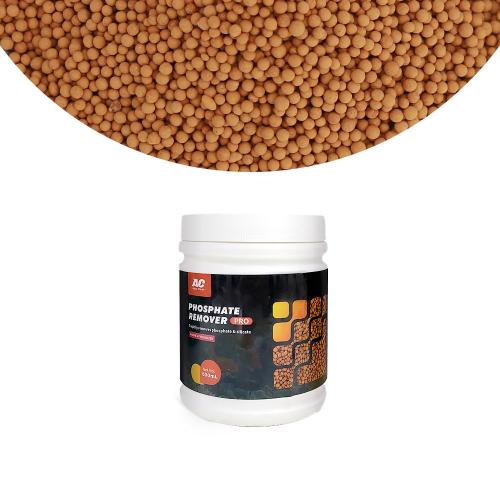
Activated carbon, ammonia-removing resins
Biological
Provides habitat for nitrifying bacteria (the core!)
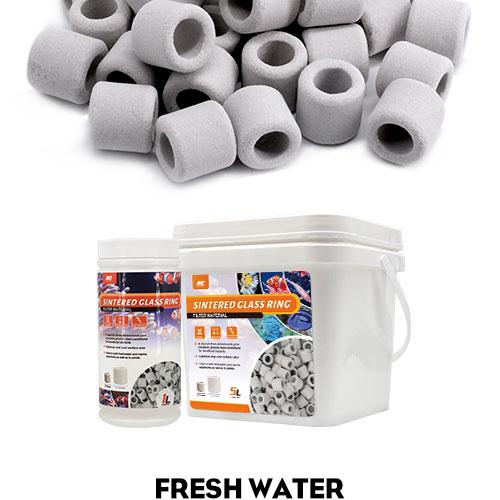
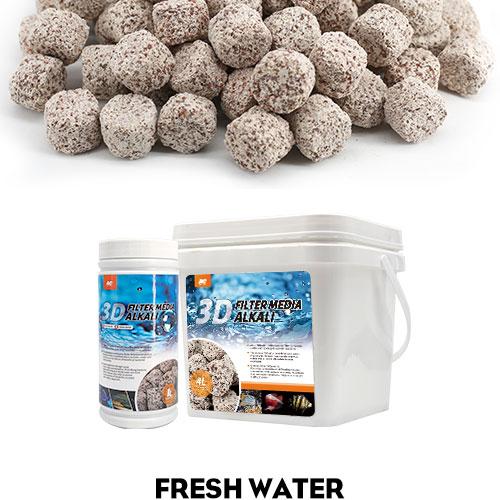
Ceramic rings, bio-balls, sintered quartz
Key Scientific Principles
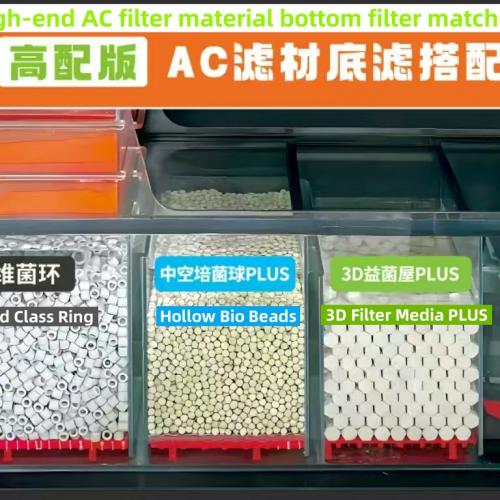
Surface area determines biological filtration capacity. Nitrifying bacteria are aerobic; porous, rough media (a single gram of ceramic rings can offer hundreds of square meters of surface area) provide abundant colonization sites. Filter floss also harbors bacteria, but its primary role is physical interception and it needs regular cleaning—note: rinse filter floss only in old tank water, never tap water, because chlorine in tap water will kill the nitrifying bacteria attached to it and crash the system.
Water flow is closely tied to dissolved oxygen. Nitrifying bacteria need oxygen to work. Gas exchange at the surface (aeration) and the water flow created by filtration together maintain dissolved oxygen levels. A general recommendation is 4–10 tank turnovers per hour (depending on fish density).
4. Stocking Density and Compatibility: The Spatial Ecology
4.1 How Many Fish per Liter of Water?
The popular rule of thumb "one centimeter of fish per liter" is only a rough reference. Scientific considerations include:
- Adult body length, not the size at purchase (many small fish are "giants in disguise"—koi, for example, can grow from 5 cm to over 80 cm).
- Oxygen demand and metabolic rate: large, highly active fish need more space.
- Territorial behavior: aggressive species such as cichlids and bettas need more individual space or dividers.
- Filtration capacity: a powerful filter system allows moderately higher densities.
The direct consequences of overcrowding are: waste exceeding the system's processing capacity → ammonia spikes → weakened immunity → disease outbreaks. Most "fish diseases" are actually symptoms of water quality problems.
4.2 Basic Principles of Mixing Species
- Matching temperature requirements: tropical fish and coldwater fish cannot be kept together.
- Similar pH and hardness needs: for example, South American dwarf cichlids prefer soft, acidic water, while African rift lake cichlids need hard, alkaline water—never in the same tank.
- Compatible temperaments: gentle fish with aggressive fish, or fast swimmers with long-finned slow fish (whose fins get nipped), require careful pairing.
- Distributing swimming levels: top-dwellers (e.g., danios), mid-water fish (e.g., tetras), and bottom dwellers (e.g., corydoras catfish, plecos) can be combined rationally to make full use of the tank's space.
5. Scientific Feeding: The Truth About Small, Frequent Meals
The Fish Digestive System
The length and structure of a fish's digestive tract are closely related to its diet:
- Carnivorous fish (e.g., arowanas, snakeheads): short gut, fast digestion; suited to high-protein foods.
- Herbivorous fish (e.g., some catfish, plecos): long gut; need plant fiber to stimulate peristalsis.
- Omnivorous fish (e.g., goldfish, guppies): somewhere in between.
The Golden Rules of Feeding
The "three-minute rule": Feed only as much as the fish can finish within three minutes. Leftover food is one of the largest sources of ammonia pollution.
A fish's metabolic rate is determined by water temperature. The lower the temperature, the slower the metabolism, and the less food is needed. Goldfish barely need feeding in winter, while tropical fish in 28°C water require more frequent feeding.
Hunger is the norm for fish, not a crisis. In natural waters, fish rarely get a chance to be "full"; they have evolved to cope with fluctuating food availability. Moderate hunger does not harm fish—overfeeding, on the other hand, is the number one cause of enteritis, bloated bellies, and water quality collapse. In fact, slight "foraging pressure" is closer to the natural state and stimulates fish to explore and hunt.
6. Water Changes and Routine Maintenance
Why Must You Change Water?
Even with a perfect nitrification system, nitrate keeps accumulating, and trace elements are continuously depleted. Water changes are an irreplaceable part of aquarium management, because they:
- Dilute nitrate and other metabolic wastes
- Replenish trace elements and carbonates (raising KH and stabilizing pH)
- Promote fish growth and health (the mild, regular stress is similar to "exercise" and strengthens the fish)
The Scientific Way to Change Water
- Frequency and volume: generally change 20–30% weekly; high-density or bare-bottom tanks (no plants) may require larger changes.
- Temperature matching: new water should be within 1–2°C of tank temperature.
- Dechlorination: tap water must be dechlorinated or left to aerate for 24+ hours.
- Never change all the water at once: replacing the entire volume destroys the nitrification system and causes "new tank syndrome."
7. The Basic Logic of Fish Disease Prevention and Treatment
Most fish diseases follow the same logical chain:
Water quality deterioration → stress → weakened immunity → pathogens seize the opportunity
Therefore, the first principle of treating fish disease is not medication—it's testing the water. Common fish diseases include:
- Ich (white spot disease, caused by Ichthyophthirius): salt-grain-like white spots on the body, caused by a parasite; treat by raising the temperature to 28–30°C (some parasites cannot tolerate high temperatures) combined with medication.
- Fungal infection (Saprolegnia): cotton-like filaments growing on wounds, common in fish that are injured, cold, or in poor water.
- Fin and tail rot: bacterial infection, often triggered by injury or deteriorating water quality.
A special warning: many aquarium medications are equally toxic to nitrifying bacteria. Careless dosing may cure nothing while crashing your filtration system first. The first step of any treatment is isolating the sick fish (setting up a quarantine tank); the second step is checking and improving water quality.
8. Aquatic Plants and Aquascaping: More Than Just Decoration
Aquatic plants are not merely decorative—they are functional components of the ecosystem:
- Absorbing nitrate: directly using the nitrogen from fish waste, forming a "double insurance" alongside water changes
- Producing oxygen: photosynthesis releases O₂
- Stabilizing water quality: roots and leaves provide habitat for microorganisms, building a more complex micro-ecosystem
- Providing shelter: reducing fish stress, critically important during breeding
The challenge of plant keeping lies in lighting and carbon. Plants need light of the appropriate spectrum (a favorable red-to-blue ratio) and duration (generally 6–8 hours; longer periods trigger algae), as well as carbon dioxide (CO₂). Submerged plants cannot absorb sufficient CO₂ from the air the way terrestrial plants do—this is the core reason planted tanks often fail.
About algae: algae outbreaks are almost always a signal of imbalance between lighting and nutrients (ammonia/nitrate/phosphate). Rather than buying various "algae-removing chemicals," return to ecological regulation—shorten lighting hours, control feeding, grow fast-growing plants to outcompete algae for nutrients, and introduce cleanup crew organisms (e.g., otocinclus catfish, Neocaridina shrimp).
Fishkeeping Is a Slow Science
The core philosophy of scientific fishkeeping can be condensed into three sentences:
1. Cycle the water before adding fish—the nitrification system is the lifeline.
2. Stability trumps everything—temperature, pH, feeding, and water changes: consistency matters more than perfection.
3. Observe before intervening—learn to read your fish's behavior (appetite, swimming posture, body color, breathing rate); they are the most sensitive water-quality monitors of all.
When you stop seeing the aquarium as a glass box holding water and start treating it as a miniature ecosystem that requires careful stewardship, those colorful little lives will reward you with vibrant vitality.