The Hidden Key to Marine Tank Stability: Why More Reef Keepers Are Switching to Low-Phosphate Filter Media
Update time: 26-07-29 Views: 183
The Silent Killers in Your Reef Aquarium — Phosphate, Ammonia & Nitrite
For marine and reef aquarium hobbyists, water stability is the single most important factor in keeping corals healthy and fish thriving. A reef tank is a miniature closed ecosystem. Fish waste, uneaten food, and coral secretions continuously break down into ammonia (NH₃/NH₄⁺) and nitrite (NO₂⁻) — both highly toxic to marine life. Even at low concentrations, they can cause coral recession, fish stress, and mortality.
At the same time, phosphate (PO₄) is another headache for reef keepers. Elevated phosphate levels inhibit coral calcification, fuel algae outbreaks, and turn a crystal-clear reef tank into an algae farm. Many aquarists diligently perform water changes and control feeding, yet phosphate remains stubbornly high — the culprit is often the filter media itself.
Traditional ceramic media or volcanic rock can contain significant phosphate in their raw materials, slowly leaching it into the water over months of use and becoming a constant source of contamination. Additionally, conventional media often feature dense pore structures that clog easily, restrict water flow, and create anaerobic zones that actually produce more harmful substances.
AC Special for Marine Bio Block: Bio-Media Engineered for Reef Tanks
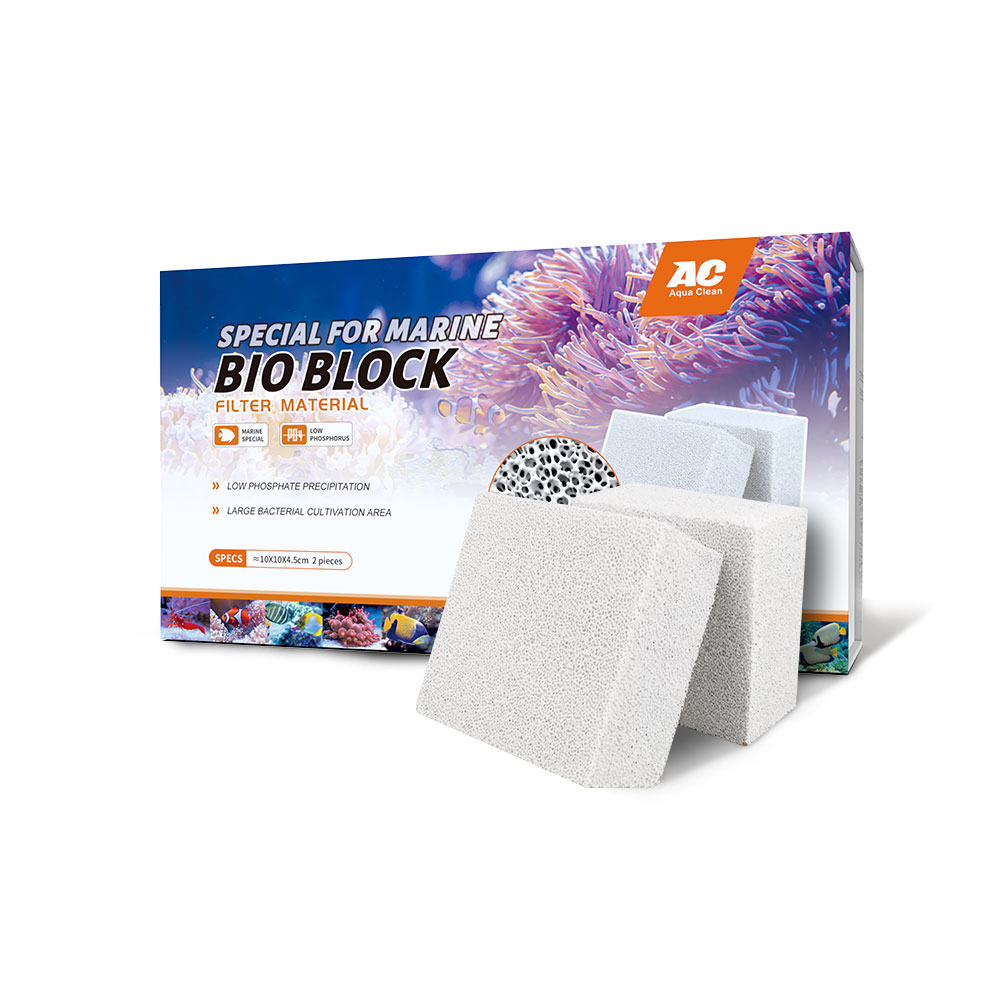
To address these core pain points, AC Aqua Clean developed the Special for Marine Bio Block — a biological filtration material formulated and structured specifically for saltwater environments.
1. Ultra-Low Phosphate: Eliminate PO₄ at the Source
Independent testing confirms that the AC Marine Bio Block contains only 0.0274% phosphate. This means the media itself contributes virtually zero phosphate to your system, freeing aquarists from the anxiety of "media leaching." For SPS coral keepers running ultra-low nutrient systems (ULNS), this is a filter media you can trust for the long term.
2. Open-Porosity Structure: Superior Flow, Zero Clogging
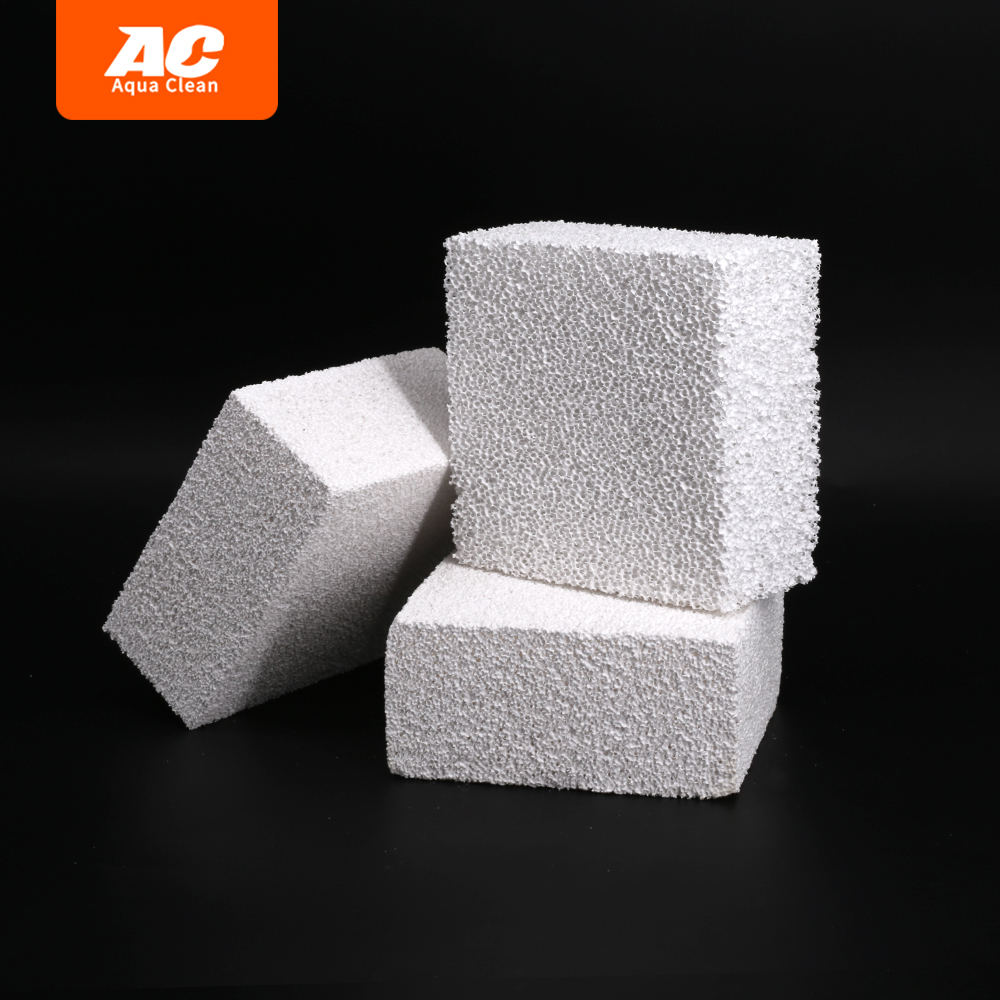
Unlike dense ceramic media, the AC Marine Bio Block features an open-porosity structure that allows water to pass smoothly through the entire block. This design delivers two immediate benefits:
- Anti-clogging: Organic debris is less likely to accumulate inside, preventing dead zones and anaerobic buildup;
- Efficient mass transfer: Ammonia- and nitrite-rich water fully contacts the media surface, allowing nitrifying bacteria to break down toxins far more effectively.
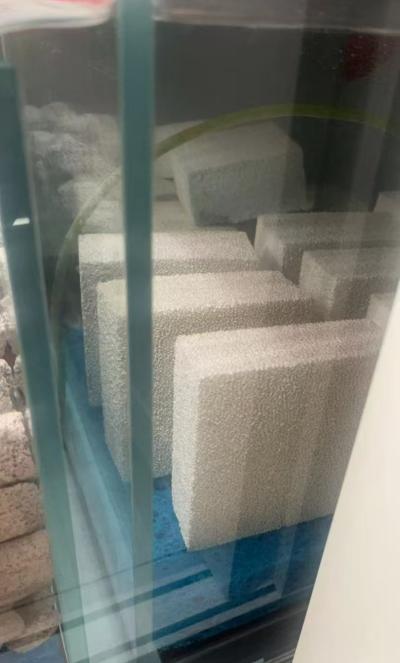
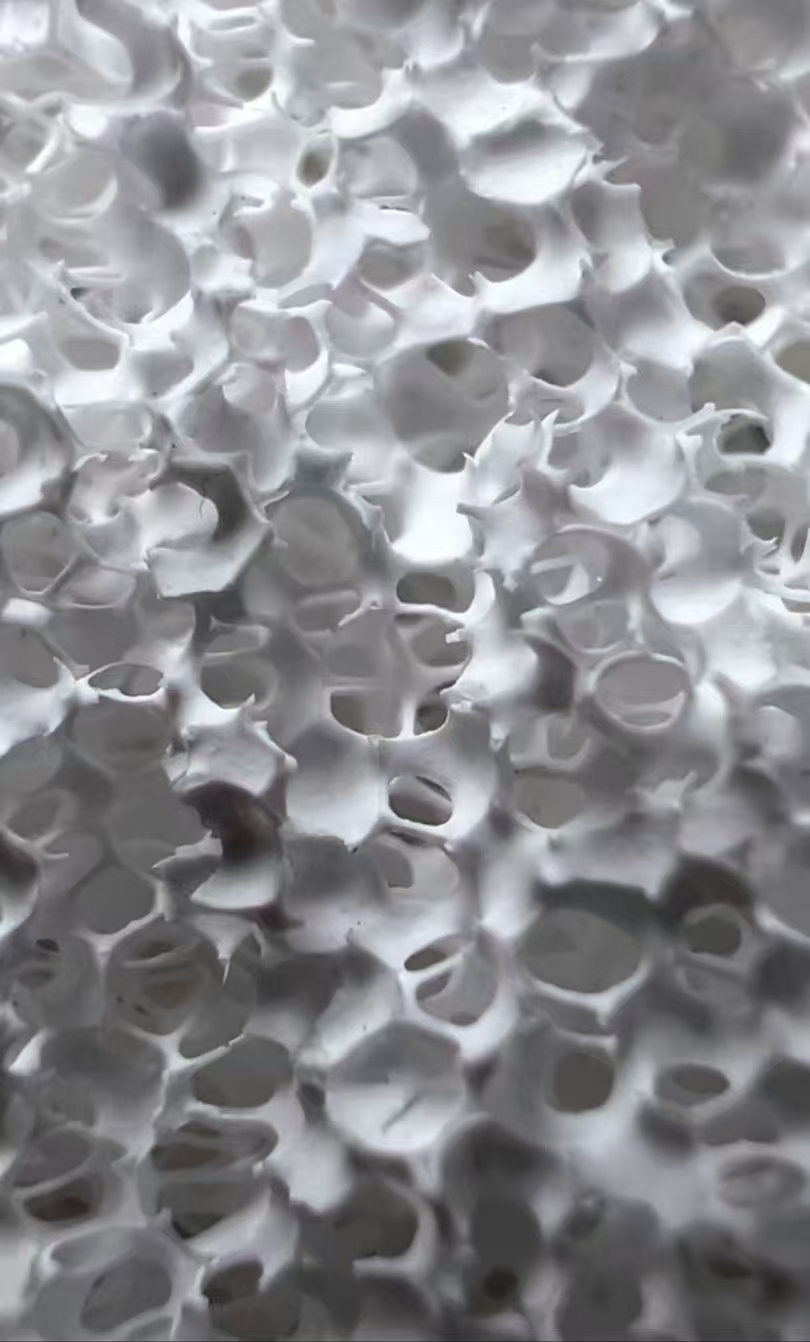
3. Massive Surface Area: The Perfect Home for Nitrifying Bacteria
Nitrifying bacteria are aerobic and require extensive attachment area to form a stable colony. The AC Marine Bio Block offers a vast internal surface area, providing ample colonization space for Nitrosomonas, Nitrobacter, and other beneficial strains. Once established, these colonies continuously convert toxic ammonia → nitrite → nitrate, maintaining rock-stable water parameters and reducing the frequency of water changes and the shock they cause to corals.
4. Minimal Aluminum Ion Leaching, Far Below Safety Standards
Some ceramic media carry a risk of aluminum ion (Al³⁺) leaching, which can be toxic to invertebrates and corals in excess. Soak-testing of the AC Marine Bio Block shows an aluminum ion output of just 0.005 ppm — well below both the drinking water national standard (0.2 mg/L) and the aquarium filter media safety threshold (0.02 mg/L). It is completely safe for long-term use in reef systems.
5. Heavy Metals: ND (Not Detected), EU RoHS Compliant
Safety is non-negotiable at AC. SGS-certified testing shows that cadmium (Cd), lead (Pb), mercury (Hg), and hexavalent chromium (Cr(VI)) are all ND (Not Detected), fully complying with EU RoHS Directive (EU) 2015/863. You can place the Bio Block in your sump, back filter, or canister with complete confidence, with no risk of chronic heavy-metal accumulation harming your ecosystem.
How to Use the AC Special for Marine Bio Block
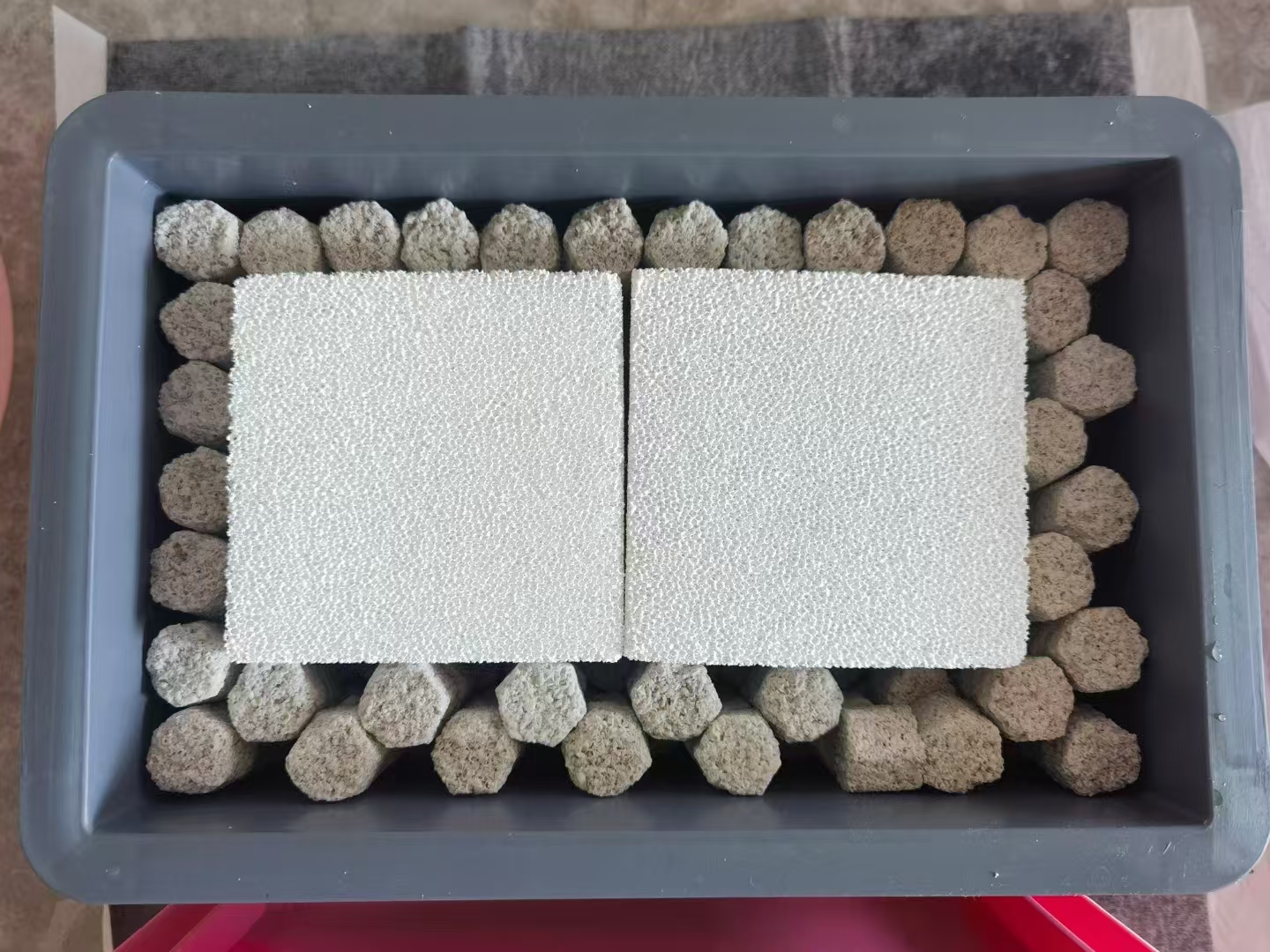
The AC Marine Bio Block measures 10 × 10 × 4.5 cm and is available in single-block and two-block packages, making it easy to configure for any sump or filtration compartment size.
Recommended Usage:
- Place the blocks in the biological filtration chamber of your marine tank; water flow should pass vertically upward or horizontally through the media;
- Pair with mechanical filter floss and activated carbon to create a complete "mechanical → biological" filtration chain;
- For new tank cycling, use the Bio Block as your primary colonization media to accelerate nitrification; for established tanks, gradually replace high-phosphate legacy media to help lower overall system phosphate.
The essence of reef keeping is stability — stable parameters, stable bacterial ecology, and stable low-nutrient conditions. Choosing a filter media that does not leach phosphate, does not leach toxins, does not clog, and maximizes bacterial colonization is the most fundamental responsibility every serious aquarist owes to their livestock.
AC Aqua Clean Special for Marine Bio Block: Let the data speak for itself, and make reef tank maintenance easier and coral coloration more vibrant.
Related News