Excess Phosphate in Your Aquarium? AC PO4 3D Filter Media Removes Phosphate Fast — Gently, and Cultivates Beneficial Bacteria Too
Update time: 26-10-10 Views: 18
If you've been in the hobby long enough, you've probably faced this frustrating scenario: green algae and brown algae quietly creep onto your glass and hardscape, algae film coats your plant leaves, and the water always looks slightly hazy. You've tried water changes, reduced lighting, and scrubbed the glass — yet the algae keep coming back. The real culprit is often not light, but elevated phosphate (PO4) levels in the water.
Where Does Phosphate Come From — and Why Is It Algae's Favorite Food?
An aquarium is a closed micro-ecosystem. Phosphate enters your tank from several sources:
- Uneaten fish food: Overfeeding is one of the biggest contributors to PO4;
- Fish waste and metabolic byproducts: Phosphorus is continuously released through fish excretion;
- Decaying plant matter: Aging, rotting leaves and melt release phosphate back into the water;
- Tap water: In some regions, tap water itself carries a noticeable phosphate load.
Algae are far more tolerant of low-nutrient conditions than aquatic plants. As long as phosphate is high, even modest light will fuel explosive algae growth. Most fish and plants thrive at low PO4 levels (generally recommended below 0.5 mg/L). Excess phosphate doesn't just ruin the view — it suppresses plant growth, accelerates eutrophication, and over time, stresses your fish.
The Limits of Traditional Phosphate Removal
Common phosphate-control methods each have their drawbacks:
- Heavy water changes: Only dilute the problem temporarily — a symptom fix, not a cure, and wasteful;
- Adsorption resins / chemical media: Fast-acting but "aggressive" — a sudden PO4 crash can destabilize water chemistry and shock both fish and the nitrifying system;
- Relying on plants alone: Absorption rates fluctuate with lighting and CO2, making results unreliable.
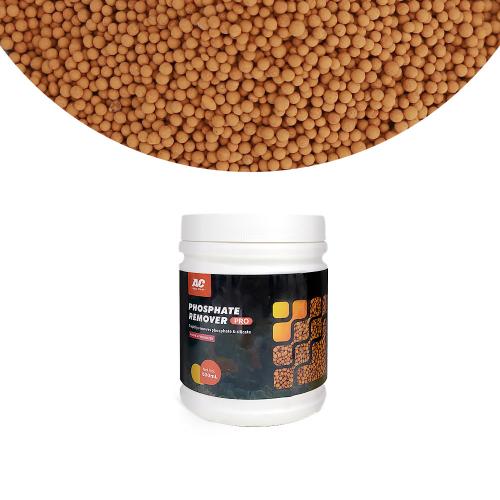
What if there were a filter medium that could remove phosphate quickly and continuously, yet do it gently and steadily, without stressing your aquarium inhabitants? That is exactly the design philosophy behind the AC PO4 3D Filter Media.
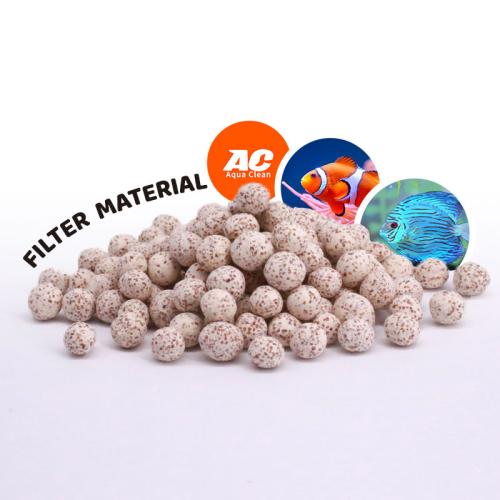
AC PO4 3D Filter Media: Biological Removal + Catalytic Removal in One Medium
The AC PO4 3D Filter Media combines microbial denitrifying phosphate-removal technology with specific nano-catalytic materials integrated into the media — a "dual-engine" approach to phosphate control:
1. Microbial denitrification and phosphate uptake: The medium provides an ideal habitat for denitrifying phosphate-removing bacteria, which assimilate phosphate from the water while denitrifying — converting nuisance nutrients into harmless compounds;
2. Fast catalytic phosphate removal: The nano-catalytic components act directly on dissolved phosphate, capturing and removing it quickly.
As shown in the performance comparison curve in our product catalog: starting from the same initial phosphate concentration (2.0), the AC PO4 3D Filter Media brings phosphate down to near zero within about 3 days, while conventional phosphate-removal media work noticeably slower and plateau at a higher residual level. Fast — yet the decline curve is smooth. This is what sets it apart from traditional chemical adsorbents: it avoids the shock of a sudden PO4 crash on aquarium life, making it genuinely gentle and safe for fish.
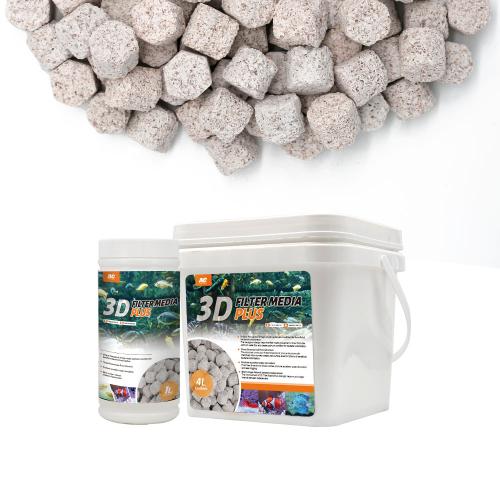
3D Pore Channel Structure: More Than Phosphate Removal — A Bacteria Cultivation Powerhouse
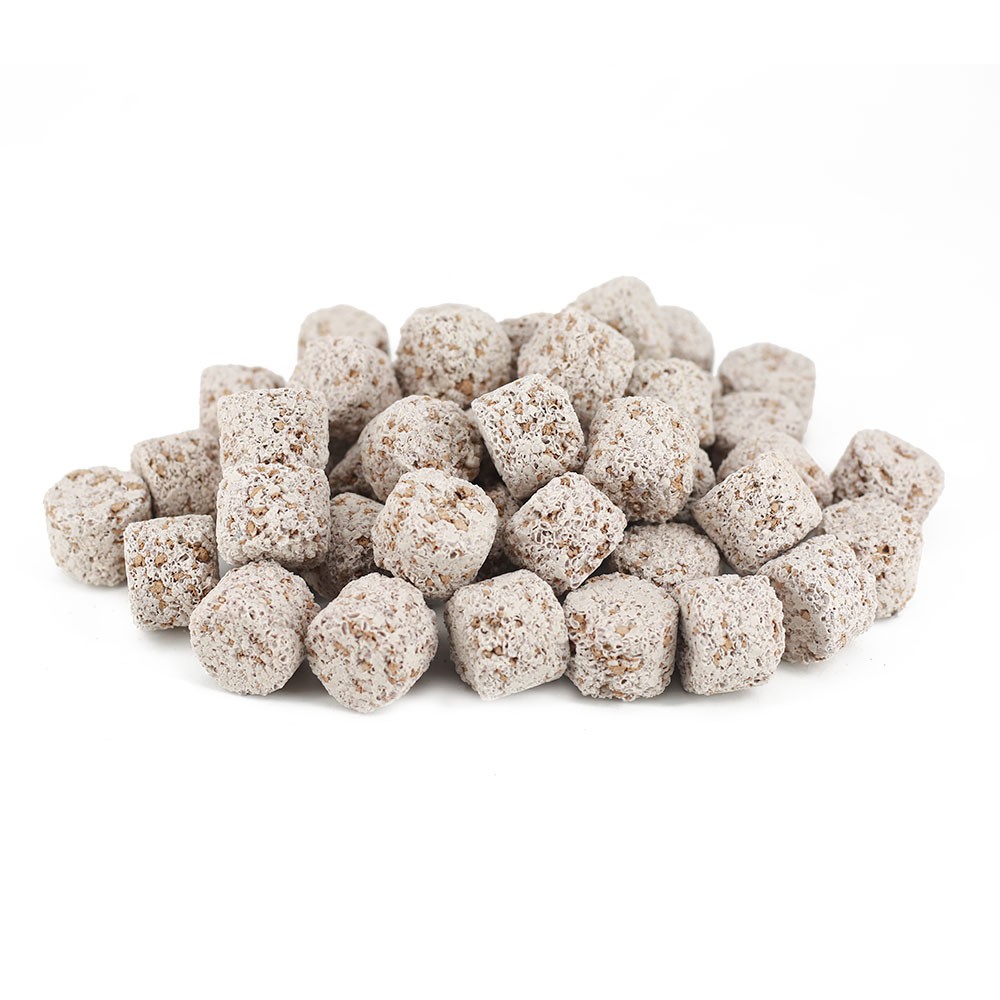
A great filter medium does far more than adsorb. The AC PO4 3D Filter Media features a 3D pore channel structure with interconnected micropores, creating a vast surface area for the colonization of billions of beneficial bacteria — especially nitrifying bacteria. In practice, this means:
- Cultivates nitrifying bacteria: The medium itself serves as a premium biological filter medium, supporting the entire nitrification process and helping build a stable nitrogen cycle;
- One medium, multiple functions: One bucket of media delivers both "phosphate removal + biological filtration" — less media stacking, a tidier and more efficient filter compartment;
- Excellent flow-through: The interconnected pore channels resist clogging, keep water flowing freely, and supply bacteria with ample oxygen and nutrients.
Specifications & Usage Tips
Item
Details
Product Name
AC PO4 3D Filter Media (Phosphate Removal Filter Medium)
Package Size
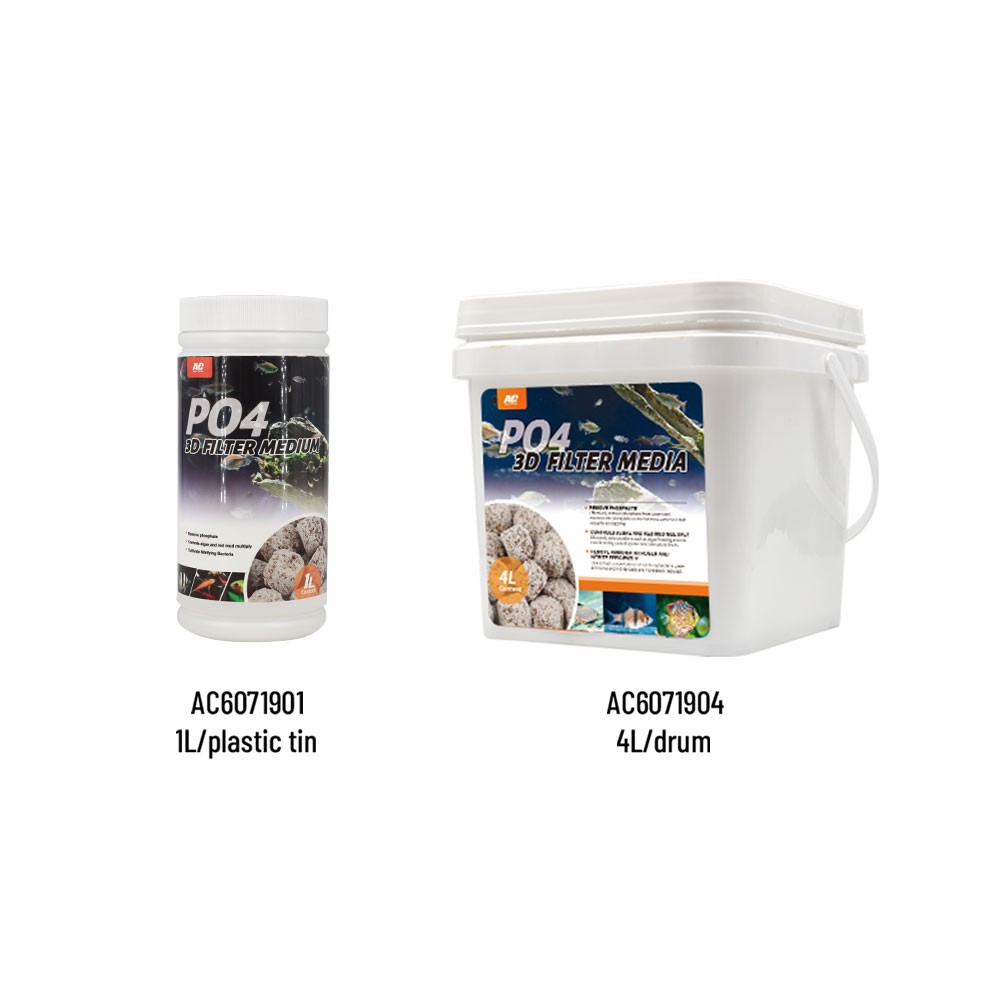
4L / bucket
Main Functions
Removes phosphate from aquarium water; cultivates nitrifying bacteria
Application
Canister filters, sump filtration, trickle/drip filters, hang-on-back filters, etc.
Usage Tips:
- Place the medium in a well-flow area of your filtration system (e.g., the middle tray of a trickle filter, or the biological chamber of a sump) to ensure full wetting and maximum water contact;
- When setting up a new tank or replacing media, combine it with other AC biological filter media to build a complete filtration chain: mechanical filtration → biological cultivation → phosphate & algae control;
- Monitor PO4 regularly at first; once levels stabilize, testing can be less frequent. If algae recur, check whether overfeeding is the cause.
Phosphate control is a shared challenge across planted tanks, biotope aquariums, arowana and discus tanks, koi setups, and more. Instead of fighting algae outbreaks after they happen, why not let your filtration system remove phosphate on its own — quietly and continuously? Rooted in microbial denitrification technology, accelerated by nano-catalytic materials, and built on a 3D porous structure with a massive bacterial surface area, the AC PO4 3D Filter Media makes phosphate reduction fast, gentle, and long-lasting — PO4 goes down, algae stay under control, and your fish thrive in crystal-clear water.
Related News