Still Aging Tap Water Before Water Changes? The AC Carbon Fibre Water Exchanger Lets You Refill Your Aquarium Straight from the Tap
Update time: 26-08-15 Views: 140
For every aquarium enthusiast, regular water changes are the foundation of maintaining a balanced aquatic ecosystem. Whether you keep sensitive show fish like arowanas, discus, and stingrays, or run a planted aquascape tank, water quality and stability are the single most important factors determining the health and survival of your fish. Yet, one challenge unites hobbyists worldwide: chlorine in tap water.
Why Can't You Put Tap Water Directly into Your Aquarium?
Municipal water treatment facilities add chlorine or sodium hypochlorite to disinfect drinking water, leaving a certain level of residual chlorine in the tap water. While safe for human consumption, this residual chlorine is lethal to aquarium life:
- Chlorine burns fish gills, damaging the protective mucus coating and causing respiratory distress and weakened immunity;
- It also kills nitrifying bacteria, destroying your established biological filter and triggering water quality crashes;
- Additionally, the pH and GH (General Hardness) of tap water often differ significantly from your aquarium water. Adding large volumes of untreated tap water can cause dangerous parameter swings, stressing your fish and potentially leading to shock or death.
This is why "aging water" — letting tap water sit in buckets for 24 to 48 hours to allow chlorine to dissipate naturally — has been considered an unbreakable rule in the aquarium hobby for decades.
The Three Major Pain Points of Traditional Water Aging
However, the aging method comes with serious practical drawbacks:
1. Space-Consuming: You need large aging buckets or barrels, which is a major burden for apartment dwellers or multi-tank hobbyists.
2. Time-Consuming: The minimum 24-hour waiting period means you can't respond to sudden water quality emergencies.
3. Uncontrollable Quality: Aged water can breed mosquitoes, collect dust, and still contains physical impurities like rust, sediment, and suspended particles.
So, is there a solution that removes chlorine and impurities instantly while maintaining stable water parameters, allowing you to add tap water directly to your tank?
AC Carbon Fibre Water Exchanger (3rd Gen): Redefining the Aquarium Water Change Experience
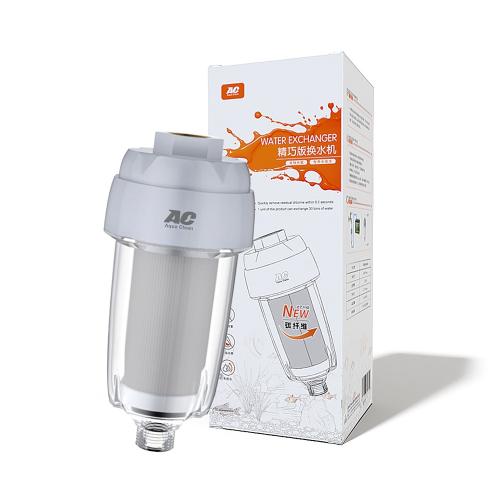
As a professional brand dedicated to aquarium filtration media, AC Aqua Clean introduces the Carbon Fibre Water Exchanger 3rd Generation Upgrade — designed specifically to eliminate these pain points. With no complex installation and no waiting time required, simply connect it between your water source and your aquarium for instant, safe water changes.
Newly Upgraded 3-Layer Composite Filter Cartridge
The 3rd Generation Carbon Fibre Water Exchanger features a PP Cotton + Carbon Fiber + Functional Filter Media composite cartridge, with each layer serving a distinct purpose:
Layer
Material
Function
Layer 1
PP Cotton Filter
5-micron precision filtration effectively traps red worms, rust, sediment, suspended particles, green algae, insect eggs, and bacteria — with virtually no impact on water flow rate
Layer 2
Carbon Fiber Filter
Newly upgraded carbon fiber with stronger adsorption capacity and doubled dechlorination performance
Layer 3
Chlorine Removal Functional Layer
Specialized for removing residual chlorine with a reaction time of just 0.2 seconds and 100% chlorine removal efficiency
The outer PP cotton layer significantly enhances physical filtration, ensuring the water entering your aquarium is not only chlorine-free but also crystal clear and impurity-free.
Zero Impact on pH and GH
Many aquarists worry that filtration devices might alter water chemistry. The AC Carbon Fibre Water Exchanger is professionally engineered to remove chlorine and impurities efficiently without causing fluctuations in pH or GH values. Whether you keep discus and stingrays that prefer soft, slightly acidic water, or arowanas and tiger fish that thrive in neutral conditions, you can use it with confidence — no additional water parameter adjustments needed.
Ultra-Long Lifespan: One Unit Treats 30 Tonnes of Water
Calculated based on a tap water residual chlorine concentration of 0.1 mg/L (national standard ≥ 0.05 mg/L), a single AC Carbon Fibre Water Exchanger can treat up to 30 tonnes of water, with a normal service life of approximately 6 months. Whether for routine home aquarium maintenance or high-volume water changes in fish stores and breeding facilities, it delivers consistent, long-lasting protection.
Plug-and-Play Simplicity
The compact Carbon Fibre Water Exchanger requires no electricity. Simply connect it to your water line, open the tap, and safely treated water flows directly into your aquarium. It truly achieves "no aging, no conditioning" — freeing aquarists from tedious water preparation routines.
Who Needs This Water Exchanger?
- Multi-Tank Hobbyists: Those with numerous aquariums who face high space and time costs for water aging;
- Sensitive Species Keepers: Owners of arowanas, discus, stingrays, tiger fish, Altum angelfish, and other species highly sensitive to water parameter swings;
- Beginners: New aquarists who haven't yet mastered water aging techniques and want to lower the barrier to entry;
- Aquarium Businesses: Fish stores, breeding facilities, and aquascape studios that require frequent, high-volume water changes.
"Good fish keeping starts with good water" — but good water no longer requires aging. With its professional 3-layer composite filtration technology, the AC Carbon Fibre Water Exchanger 3rd Generation Upgrade offers aquarists a safer, more convenient, and more efficient water changing solution. Make every water change an act of care for your aquarium ecosystem, not a gamble with your fish's health.
Tired of aging buckets taking over your balcony? Try this water changing essential and let treated tap water flow safely and directly into your tank.
Related News